Loading...
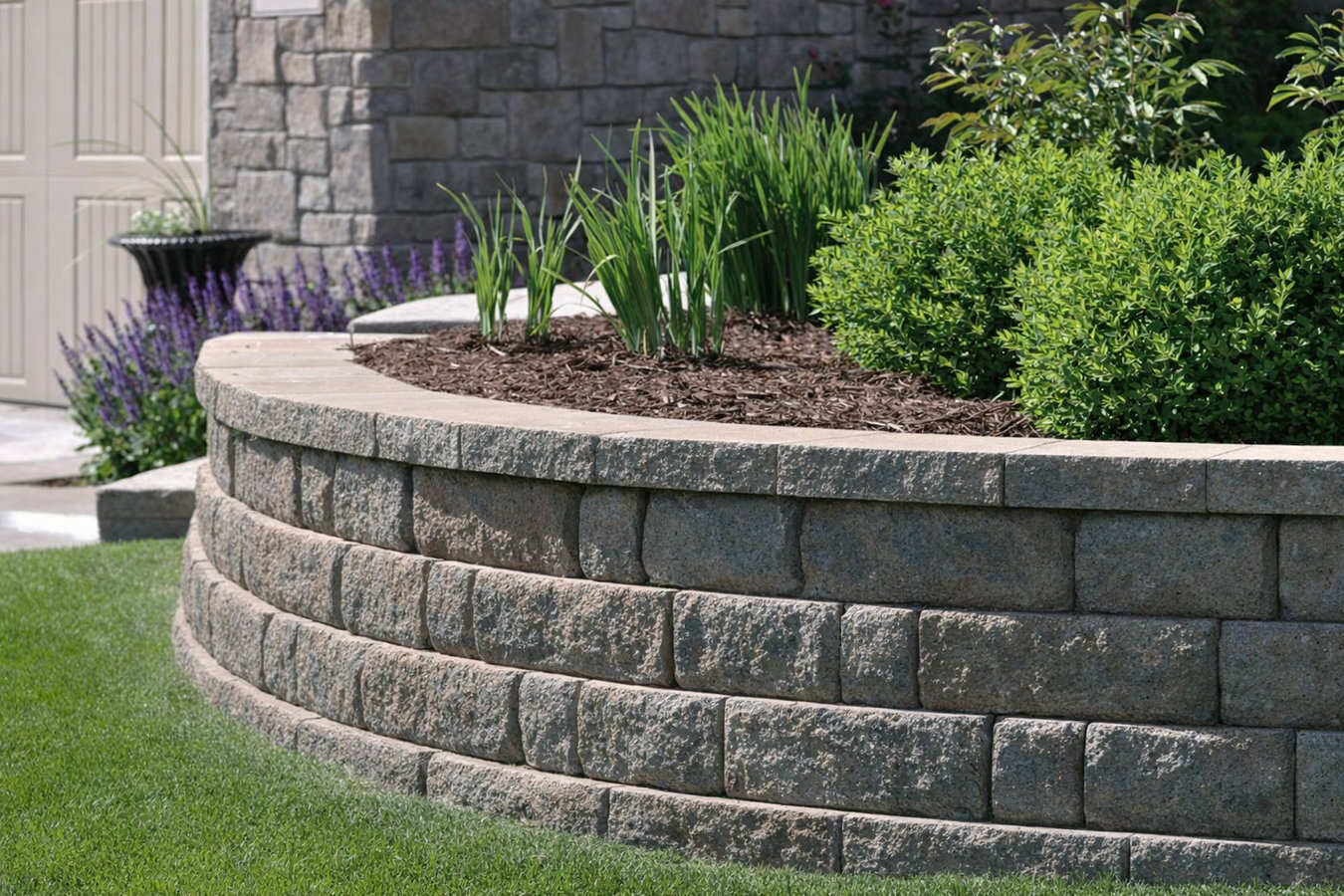
Folsom slopes lose ground every winter. We build retaining walls that stop erosion, create flat usable space, and hold up through every wet season the foothills can throw at them.
Retaining wall construction in Folsom involves building a structural wall that holds back soil on a slope, prevents erosion, and in many cases creates flat, usable yard space where a hillside used to be - most residential walls are complete in two to five days once permits are in hand.
Folsom was built on a series of hills and ridges, and a lot of homes here have slopes that either already have a retaining wall showing its age or a hillside that has been slowly losing ground every winter. Either way, the fix is the same: a well-built wall on a solid footing with proper drainage behind it.
If your slope project involves a larger masonry scope, we can pair wall construction with masonry restoration on adjacent structures - one mobilization, less disruption to your yard.
If you notice soil, mulch, or gravel migrating down your slope after heavy rain - the kind of concentrated winter storms Folsom gets - that is erosion in progress. Left alone, it gets worse every season and can eventually undermine your landscaping, your fence, or the ground near your foundation.
A retaining wall that is starting to lean or has a visible bulge in the middle is telling you the pressure behind it is winning. In Folsom's clay-heavy soil, this often happens when drainage behind the wall has failed and water pressure has built up. A leaning wall can fail suddenly, especially after a heavy rain.
Small hairline cracks can be normal settling, but cracks that are widening, running diagonally, or appearing at corners are signs of structural movement. Folsom's seasonal soil expansion and contraction accelerates this process, so cracks that seem minor in summer can open significantly by February.
If rainwater runs down your slope and collects near your foundation or garage, a retaining wall with proper grading can redirect that flow. This is especially important in Folsom, where winter storms can deliver several inches of rain in a short period and poorly graded lots send all of it toward the house.
We handle retaining wall construction using concrete block, poured concrete, and natural stone - whichever material makes sense for your slope, your budget, and what your HOA will approve. Every wall includes a gravel drainage layer and weep holes to handle the water pressure that builds up in Folsom's clay soils each winter. We also assess and rebuild failing walls - sometimes the existing structure can be saved with drainage repairs, and we will tell you honestly if that is the case.
For homeowners who want to do more with the flat space a wall creates, we can follow up with concrete block walls for privacy fencing or garden borders, keeping the same crew and materials on site to minimize disruption.
Best for homeowners with an eroding slope, a hillside that is too steep to use, or a yard that floods near the house.
Best for homeowners with an existing wall that is leaning, cracking, or showing drainage failure - and needs to be rebuilt correctly.
Best for walls that are structurally sound but have lost their drainage layer, causing water to build up and push on the wall face.
Best for homeowners with steep hillside lots who want to create multiple level tiers for gardens, patios, or play areas.
Folsom was built on rolling hills and ridges, and many neighborhoods - especially in areas like Empire Ranch, Broadstone, and the older sections near Folsom Lake - have sloped lots where retaining walls are not optional, they are structural. The local soil adds another layer of complexity. Most of the Sacramento foothills region sits on clay-heavy ground that absorbs water and swells, then contracts as it dries out. That repeated movement puts extra stress on retaining walls over time, which is why drainage behind the wall is not something to cut corners on here. A contractor who skips the gravel drainage layer in Folsom soil is setting you up for a wall that leans or cracks within a few wet seasons. The University of California Cooperative Extension recommends proper drainage backfill as the most critical factor in retaining wall longevity in California's Mediterranean climate zones.
Folsom's rainy season is concentrated between November and March, and a slope that looks fine in September can be actively eroding by January if nothing is holding it back. Acting before the first storms arrive is always easier and cheaper than dealing with a failed slope afterward. We serve hillside homeowners throughout the Folsom area, including in El Dorado Hills and Granite Bay, where the same foothills terrain and clay soils create identical challenges for homeowners on graded lots.
We respond within one business day. We will ask about your slope, roughly how long and tall the wall needs to be, and whether there is an existing wall to remove. Most retaining wall jobs in Folsom need a site visit before any real number can be given.
We walk your slope, check the soil conditions, and measure the area. We note whether the wall will need a city permit - required for walls over four feet - and give you a written estimate that breaks out materials, labor, and permit fees separately.
We submit the city permit application on your behalf and help you navigate any HOA design review your neighborhood requires. This step can take two to four weeks depending on the city's processing time, so plan accordingly if you have a deadline in mind.
Once permits are in hand, we dig, build from the base up, pack gravel drainage behind every course, and backfill when the wall is complete. If a permit was pulled, a city inspector signs off on the work. We coordinate that inspection - you do not have to.
Free on-site estimate. We handle permits, HOA paperwork, and the final city inspection.
(279) 235-1871We pack gravel drainage behind every wall and install weep holes so water has somewhere to go instead of building up pressure. This is the step most failing walls in Folsom were missing when they were first built. We do not skip it, and it is what determines whether a wall is still standing in 30 years.
Walls over four feet require a city permit and a final inspection. We file the application, track the status, and coordinate the inspector visit at the end. A properly permitted, inspected wall is an asset when you sell your home - an unpermitted one can stop a sale in its tracks.
We follow the construction standards published by the Mason Contractors Association of America, which covers footing depth, drainage requirements, and batter - the slight backward lean built into every well-designed wall to counter soil pressure. You can verify the standards at the MCAA website.
We have built walls on hillside lots across Folsom, El Dorado Hills, and Granite Bay - the same rolling terrain, the same clay soils, the same seasonal drainage patterns. That local experience means we recognize site conditions quickly and know how to build for them, not just how to build in general.
All of that adds up to a wall that was built for this specific ground, in this specific city, with the permits to prove it was done right. That is what we deliver on every job.
Restore aging masonry structures on your property while the crew is already on site for the wall project.
Learn MoreAdd privacy walls or garden borders using the same concrete block materials on the level space your new retaining wall created.
Learn MoreGet a free on-site estimate and a written quote before you commit to anything. We handle permits, HOA approvals, and the final city inspection.