Loading...
Chipped faces, crumbling mortar, and recurring cracks all get worse with every season. We find the cause and make repairs that hold up to Folsom summers and wet winters.
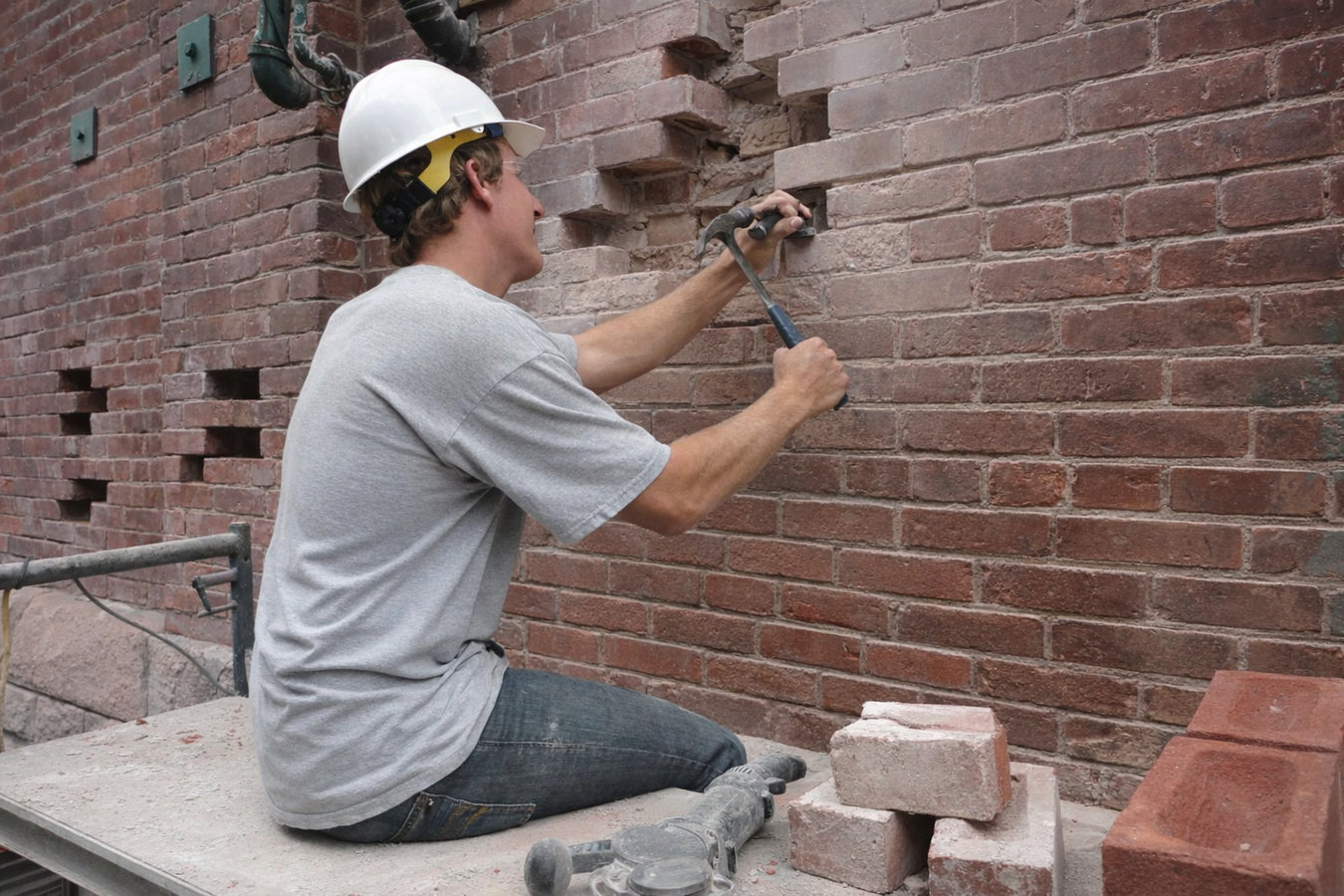
Brick repair in Folsom covers crumbling mortar joints, chipped or spalled brick faces, and recurring cracks in walls, chimneys, and steps - most residential jobs take one to three days and targeted repairs are often far less expensive than homeowners expect.
Most brick problems look worse than they are. A crack in a garden wall or a few flaking brick faces does not mean you need to tear anything out. The question is whether the brick itself is structurally sound - and if it is, repair can bring it back without a full rebuild. Folsom homes from the 1980s and 1990s are right at the age when mortar and brick surfaces start to show real wear, and the Brick Industry Association notes that mortar is designed as a sacrificial layer - it fails before the bricks do, so catching it early is the whole idea.
When the damage involves just the mortar joints rather than the brick face itself, the work is often categorized as tuckpointing. We assess both during every estimate and scope the work accordingly so you only pay for what is actually needed.
Run a finger along the lines of mortar between your bricks. If the material crumbles away easily, feels sandy, or shows visible gaps wider than about a quarter inch, the mortar has broken down. This is the most common sign, and one you can spot yourself without any tools.
Folsom sits on clay-heavy soils that swell when winter rains arrive and contract through the dry summer. If you see cracks in your brick steps, retaining wall, or exterior veneer that seem to reopen each spring, seasonal soil movement is likely at work. Patching without addressing the cause just resets the clock.
When the outer layer of a brick starts to break away - called spalling - it means water has been getting into the brick and the heating-and-cooling cycle is breaking it apart from the inside. Once spalling starts, it does not stop on its own and will get worse each season.
That white powder is mineral salt left behind as water moves through the masonry and evaporates. It is not dangerous on its own, but it signals that moisture is traveling through the wall somewhere it should not be. The source needs to be found, not just the symptom treated.
We repair brick on home exteriors, chimneys, retaining walls, steps, garden walls, and planters. Every job starts with a thorough look at what is driving the damage - because a repair that ignores the cause will not last. When the problem is primarily in the mortar joints rather than the brick faces, we handle that as tuckpointing - the same careful process of removing old material and packing in fresh mortar matched to color and texture. Where bricks themselves are damaged, we assess whether surface repair, individual brick replacement, or a combination is the right approach.
Matching replacement bricks is one of the harder parts of this work. Older Folsom homes may have brick that is no longer in production, and getting the color and texture right takes experience. We source carefully and, when an exact match is not possible, we discuss options with you before committing to the repair. For larger structural situations involving retaining walls or driveway pavers, we scope those as separate projects to make sure each gets the right attention.
Suits homeowners with visible gaps or crumbling between bricks on exterior walls, chimneys, steps, or garden structures.
Suits homeowners where brick faces are chipping or flaking and the underlying brick body is still structurally sound.
Suits homeowners where one or more bricks are cracked through, broken, or too far deteriorated to surface-repair in place.
Suits homeowners with visible gaps or cracking at the chimney top, cap, or crown - areas that take the most direct weather exposure.
Folsom's clay-heavy soils are one of the biggest drivers of brick damage in this area. Clay expands when wet and contracts when dry, and that seasonal movement - small as it feels - puts real stress on mortar joints, retaining walls, and brick steps over the years. Homes from the 1980s and 1990s boom period are right at the age when this cumulative stress starts showing up visibly. Homeowners in nearby Rancho Cordova and Fair Oaks are seeing the same pattern for the same reason.
The California Department of Conservation documents the expansive clay soil zones across the Sacramento foothills region - and Folsom sits squarely in that territory. Summer heat above 100 degrees adds a second layer of stress, drying mortar faster than in cooler climates and causing it to shrink and pull away from the brick. Catching deterioration before a full winter of rain pushes into those gaps is the difference between a targeted repair and a much larger project.
We get back to you within one business day. We will ask what you are seeing, where the damage is, and roughly how old the structure is - enough to come prepared for the estimate.
We walk the damage with you and look at the mortar joints, brick condition, and any signs of water or soil movement. You will hear what we find in plain terms and get a written estimate with a clear scope - no vague line items.
The crew removes damaged mortar or brick, cleans the area, and carefully packs in new material. We take the time to match color and texture before committing. The work is not loud, but there will be some scraping and grinding sounds.
We clean up debris and walk the finished work with you before leaving. New mortar needs 24 to 48 hours before it should get wet - we will let you know if rain is in the forecast and what to watch during the curing period.
A free estimate costs nothing and takes about 20 minutes. We will tell you honestly what needs fixing and what can wait - no pressure, no up-selling.
(279) 235-1871Patching a crack without understanding what is driving it - clay soil movement, a drainage problem, or a failed cap above - is a temporary fix. We look at the whole picture before recommending a repair scope, so you are not calling us back next year for the same spot.
A fresh white mortar patch on weathered brick stands out immediately and reflects poorly on the repair. We test a sample joint and confirm the color match after curing before the full job proceeds - because the finished work should blend in, not stand out.
Seasonal soil movement in the Sacramento foothills is a real and well-documented contributor to masonry cracking. We factor that in when scoping repair work and can tell you whether improving drainage near the structure makes sense alongside the brickwork.
The number on your estimate is the number you pay - unless you decide you want additional work done. If we find something unexpected during the job, we stop and talk to you before proceeding. No surprise charges, no line items added after the fact.
We serve Folsom and the surrounding Sacramento foothills communities and understand the local conditions that drive masonry wear here. Every estimate is free, every scope is written, and we stand behind our work.
When mortar joints are the primary issue - soft, crumbling, or gapped - tuckpointing removes the old material and packs in fresh mortar matched to your existing brick.
Learn MoreBrick and paver driveways in Folsom face the same clay soil and heat stress as walls - we repair and replace damaged sections to restore a level, stable surface.
Learn MoreCall or request a free estimate today - we respond within one business day and can usually get on-site within the week to assess the damage before the next rains arrive.